

Systems Online · Canada & USA
The Iron Shield between people and the threat.
Iron Shield Systems builds autonomous systems that protect lives: interceptors that stop attack drones before they land, uncrewed vehicles that carry the wounded out of the danger zone, and ISR that sees the threat first. We build the shield, not the sword. Iron Shield Systems holds a NATO Commercial and Government Entity (NCAGE) code.
All channels
Six systems. One picture.
Every line Iron Shield builds, and the layer that ties them together. Detection on one platform cues the response on another; a qualified human commands every consequential decision.
 CH 02COUNTER-UASInterceptorINT-3 and INT-5: AI Pixel-Lock interceptors that detect, lock and stop attack drones before they reach what they are aimed at.330 km/h closing · radar-cuedOpen line
 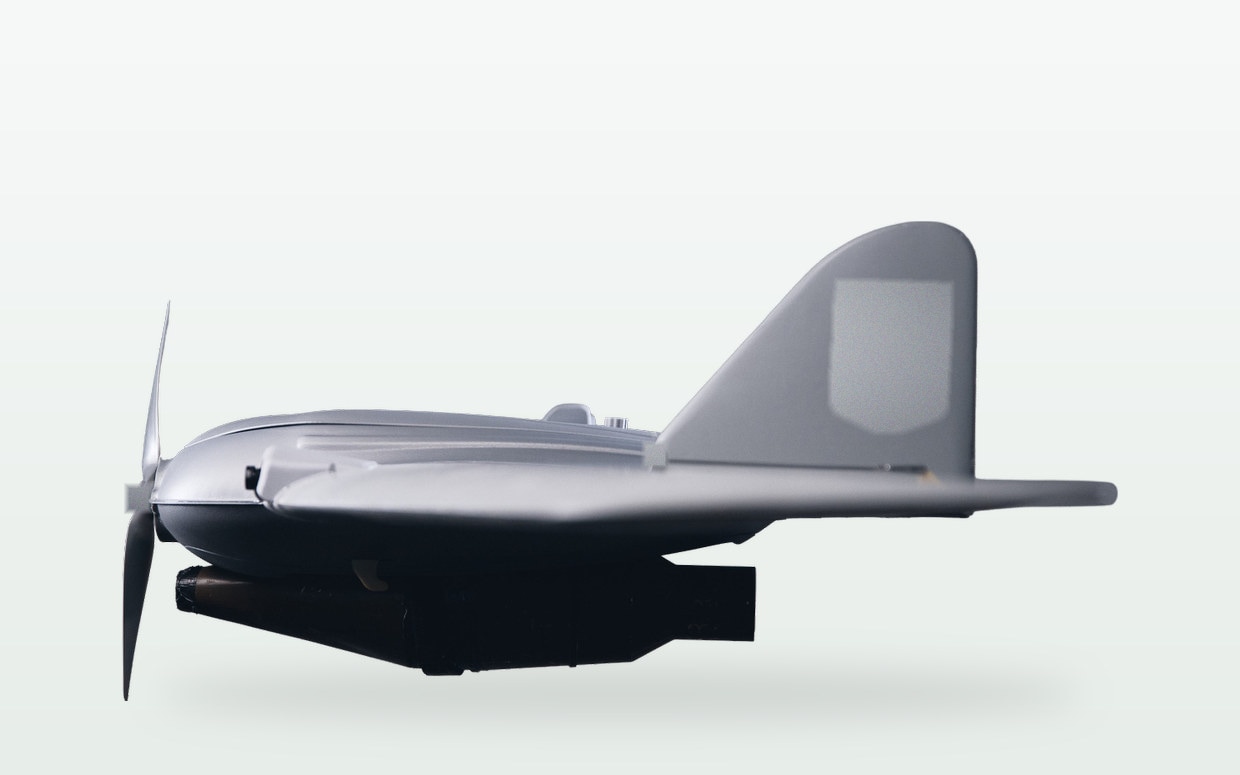 CH 03ISRReconnaissanceMagura and Grey Widow: long-endurance ISR and loitering reconnaissance, navigating without satellites when GPS is denied.120 min on station · GPS-denied navOpen line
 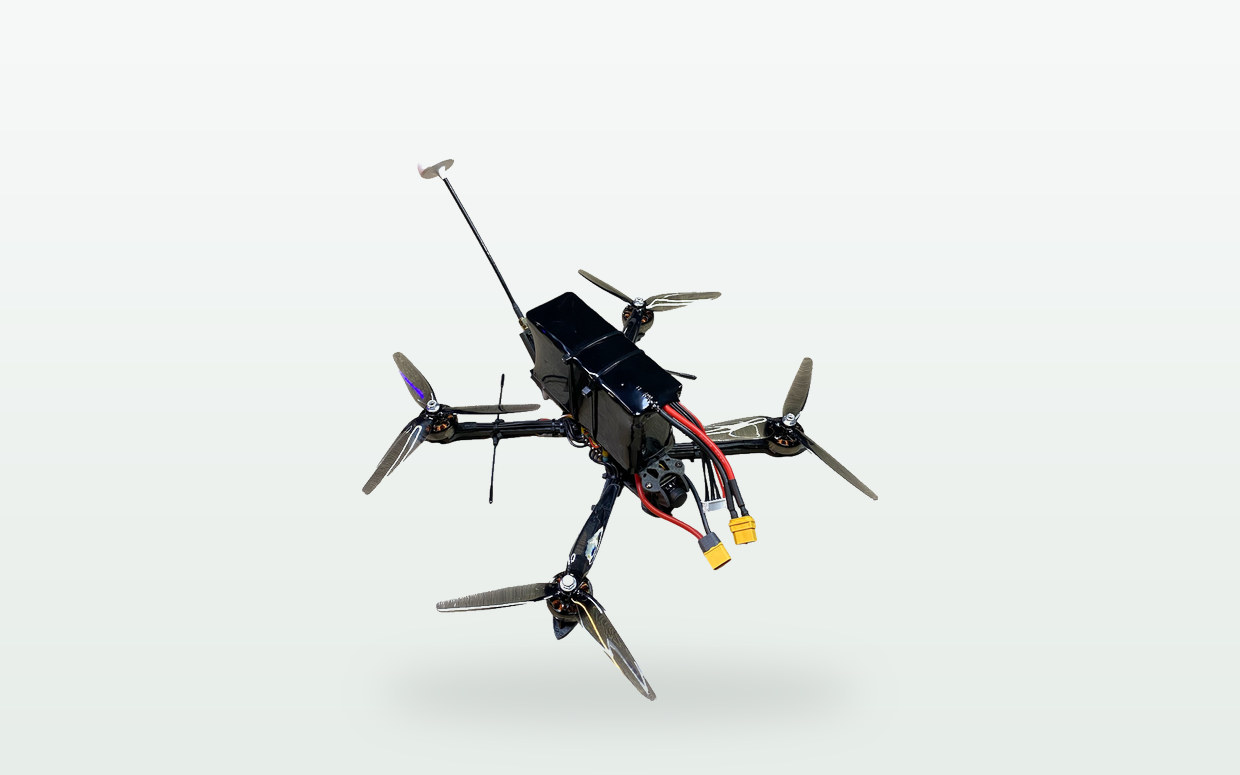 CH 04FPVLong-Endurance ISRThe Stealth family: 7″ to 15″ quadcopters on a fiber-optic hardline, with thermal optics and a modular payload bay.30 km fiber · 28 min enduranceOpen line
  CH 05CONTROL & RELAYGround ControlTBS / ERLS / S-Link: control and full-motion video to every platform, held past the horizon by an optically-stabilized relay.50+ km relay · no GPS, no compassOpen line
 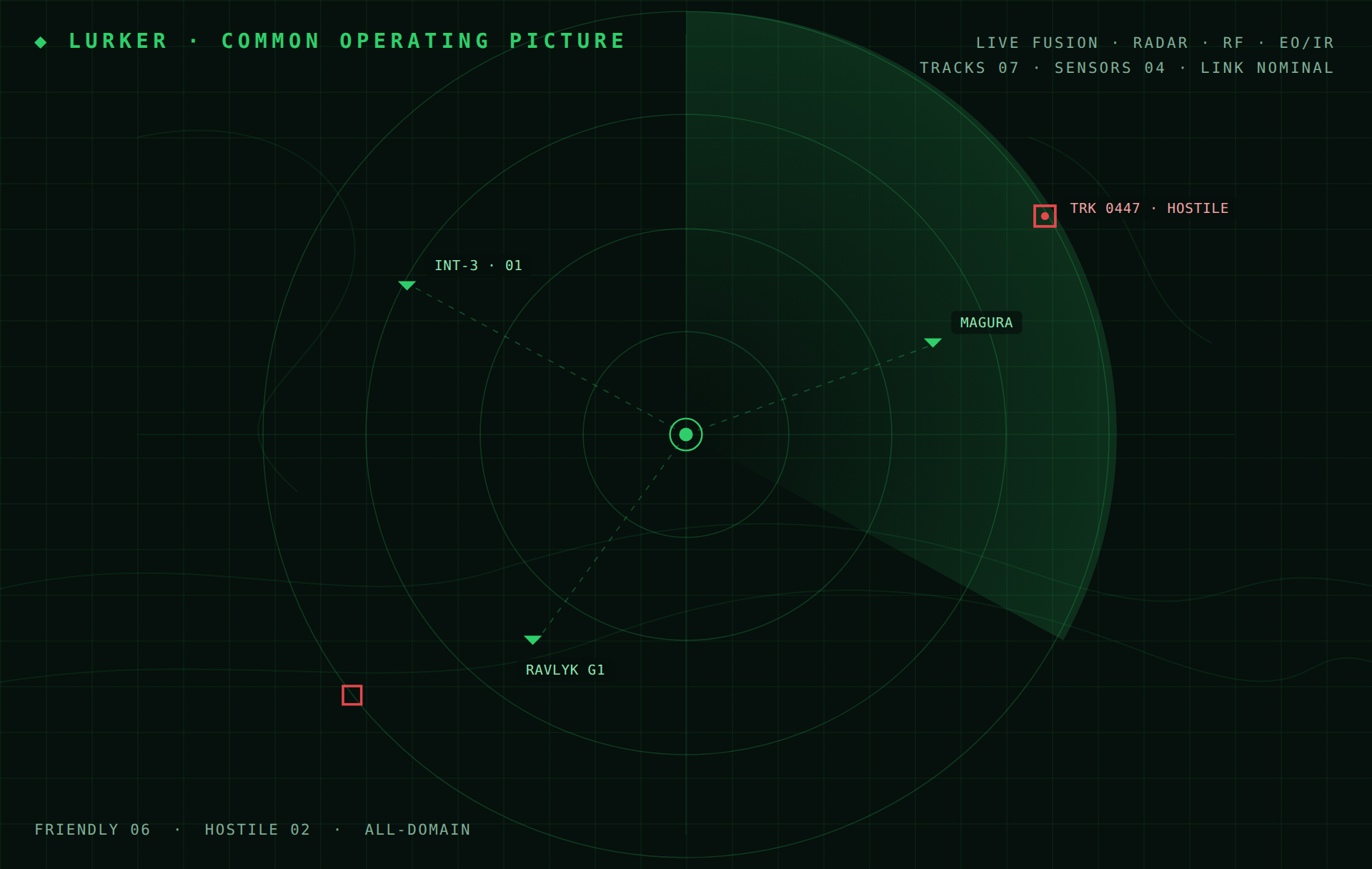 CH 06COMMAND LAYERLurker PlatformOne live operating picture that fuses every sensor and platform into a single command view, alongside our Procurement Platform.All-domain · one-operator controlOpen line
 01 / Ground · RAVLYK
The camera goes forward. The crew stays behind cover.
RAVLYK is our lead ground platform: one electric 6×6 base, a mission module that swaps in about fifteen minutes, and an operator who runs the whole job from a remote camera feed. Driving, watching, working the module — all of it done from a position that is not the exposed one.
RAVLYK Shahed Detector — acoustic detection module and telescoping mast on the standard 6×6 base
Casualty evacuation
The stretcher module goes into the exposed position and comes back under remote control, the casualty watched on camera the whole way out. The recovery crew never leaves cover.
Resupply under fire
350 kg on the deck and a two-tonne trailer behind it, into positions too exposed for a crewed vehicle.
Air-defence early warning
Acoustic detection of Shahed-type UAVs from a telescoping mast, cueing the units that answer them.
Fire and rescue
Water and foam into hazardous scenes that rescuers cannot approach, on the same chassis.
Codified and approved
Approved for use by the Armed Forces of Ukraine, military codification complete, NATO Stock Number assigned. See the full platform →
02 / Air · INT-3
The one that meets it in the air.
INT-3 is Iron Shield’s own interceptor and the second thing the company is built around. Cued by fused radar, RF and EO/IR, it climbs onto an inbound attack drone, holds it with onboard computer vision, and stops it in the air — far from the people and the infrastructure it was aimed at.
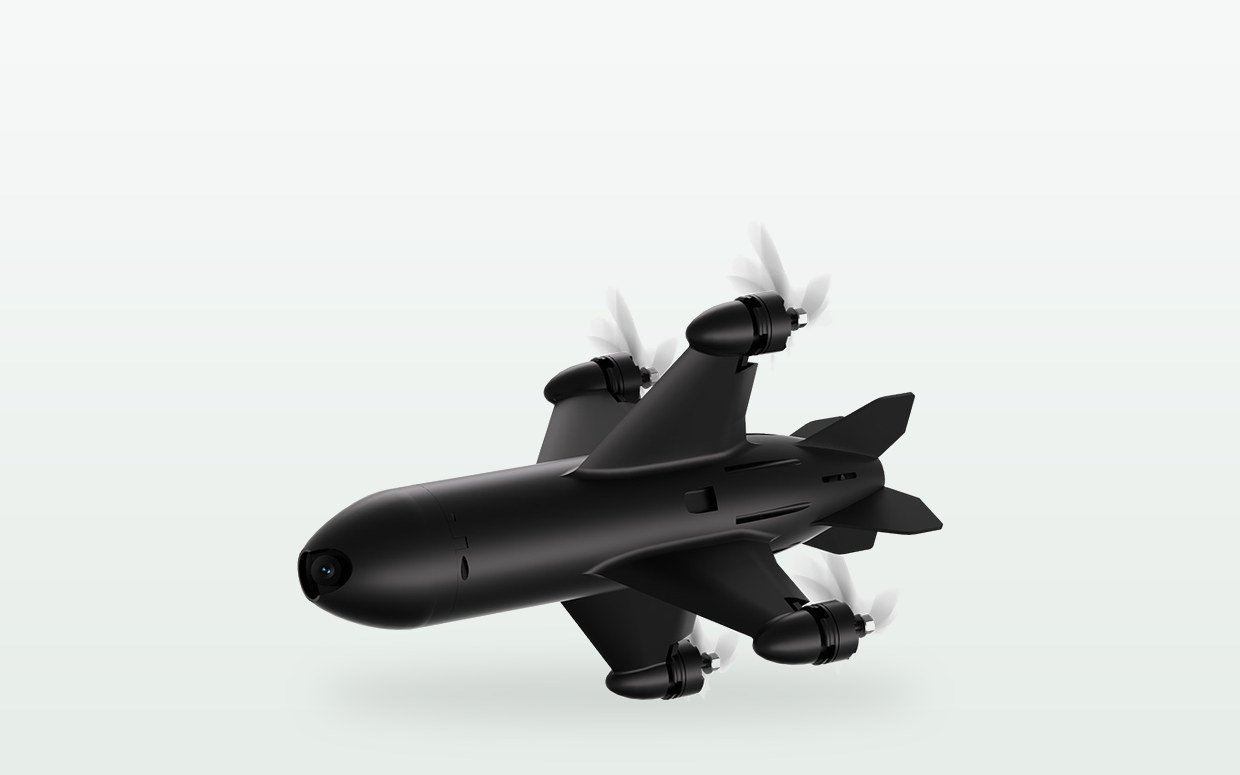
INT-3 — AI Pixel-Lock interceptor, IS-INT series
Cued, not searching
Fused radar, RF and EO/IR hand the interceptor a track the moment a threat appears, so it launches onto a solution instead of hunting for one.
Pixel-Lock terminal guidance
Onboard computer vision holds the lock through jamming, decoys and hard evasive turns, with no satellite fix and no operator flying it by hand.
330 km/h closing speed
Enough dash to run down a Shahed-class airframe rather than watch it go past, and to reach it while there is still distance between it and the target.
Human authority
The autonomy compresses the timeline; it does not remove the operator. A qualified human commands every engagement.
The interceptor line
INT-3 and INT-5 today, with the swarm-capable INT-9 in development and testing for multi-track raids. See the interceptor line →
The Lineup
One family, in the field.
Every Iron Shield system in one reel. Tap any frame to open that platform.
 RAVLYK · CargoINT-3 · InterceptorMagura · ISR
 Stealth · ISRTBS · Ground Control
 INT-3 · Front
 RAVLYK · Medevac
 Stealth · Fiberon
 RAVLYK · Shahed Detector
 RAVLYK · Platform
 Magura · Transit Case
 RAVLYK · FireGuard
 Stealth · 13-inch
 RAVLYK · IndustrialRAVLYK · CargoINT-3 · InterceptorMagura · ISRStealth · ISRTBS · Ground ControlINT-3 · FrontRAVLYK · MedevacStealth · FiberonRAVLYK · Shahed DetectorRAVLYK · PlatformMagura · Transit CaseRAVLYK · FireGuardStealth · 13-inchRAVLYK · Industrial
The Protection Loop
Detect. Track. Protect.
Detect
Fused radar, RF, acoustic, and EO/IR sensing builds a single, real-time air picture across the whole sector and surfaces incoming threats the instant they appear, long before they reach the people, positions, and infrastructure they are aimed at. Designed to improve early detection and reduce gaps in situational awareness.
Track
Onboard computer vision and autonomy hold a continuous, hand-off-free lock on the threat, through GPS denial, active jamming, decoys, and hard evasive maneuver. The track stays solid from the first detection all the way to the response, so nothing slips through the gap.
Protect
This is the moment that matters. Faster than any operator could react, the right response is already moving: an interceptor at 330 km/h onto the attack drone, an early warning to the unit, a safe route out for the wounded. Designed to increase the probability of interception before the threat reaches its target.
Live Doctrine · Counter-UAS
Autonomous interception, visualized.
An attack drone crosses the perimeter, inbound on people and infrastructure. Iron Shield's autonomy predicts its path, computes an intercept, and puts an interceptor onto it in seconds, stopping the threat in the air, far from its target. Machine speed on the reaction; human authority over every decision. This is the protective loop our systems run, thousands of times faster than an operator could alone.
How the autonomy works INT-3
IS-INT series · AI Pixel-Lock interceptor
330 km/h closingRadar & RF cuedGNSS-denied
INT-3
IS-INT series · AI Pixel-Lock interceptor
330 km/h closingRadar & RF cuedGNSS-denied
Illustrative counter-UAS scenario, not live operational data.
By The Numbers
Performance measured in lives protected.
03 / Eyes · ISR
See it first, from somewhere safe.
Magura and Grey Widow are the reconnaissance half of the picture: long-endurance aircraft that hold eyes on a front line, a wildfire or a search area from a standoff distance, and keep holding them when the satellite navigation everyone else depends on is taken away.
Magura — long-endurance ISR platform
Navigating without satellites
Vision-based navigation holds the route when satellite navigation is jammed or spoofed, which on a contested front line is the normal condition rather than the exception.
Two hours on station
Up to 120 minutes of persistent overwatch per sortie, streaming in real time to the ground, near-silent and electric so it can sit over an area without announcing itself.
Dual-use by design
The same aircraft that watches a front line watches a wildfire perimeter or a search area. Nothing about the airframe has to change for the civil job.
Two platforms
Magura for long-endurance ISR, Grey Widow for long-range loitering reconnaissance. See the ISR line →
04 / Close range · FPV
The close-in look, down a wire.
The Stealth family is short-range ISR: 7″ to 15″ quadcopters with thermal optics and a modular payload bay, flown on a fiber-optic hardline so the link is physical rather than radio. They go where a larger aircraft cannot and see what a standoff picture cannot resolve.
Stealth — long-endurance ISR quadcopter
A link nothing can jam
Up to 30 km of fiber-optic hardline, so control and full-motion video travel down a physical wire instead of through contested spectrum. Nothing to jam, nothing to intercept, nothing to direction-find.
Thermal and low light
Thermal optics for night, smoke and poor visibility, on the same airframe that flies the daylight task.
Modular payload bay
The bay carries what the task needs — sensors, a relay, or equipment placed into a position that people should not have to walk to.
Seven to fifteen inches
A family sized to the job, from the compact 7″ through the long-endurance 15″. See the FPV line →