

Products · Interceptor
INT-3
Iron Shield's AI-powered interceptor, a shield over the sky. Its Pixel-Lock system fuses external radar cueing, computer-vision target detection, and TG autopilot to detect, lock, and stop attack drones before they reach the people, positions, and infrastructure they are aimed at, Shahed-type one-way attackers and FPV threats alike. It switches frequency bands and video channels in flight, runs a dual control link with automatic band selection, and closes at up to 330 km/h to stop the threat by inertial impact.
Datasheet
Full specification
- AI Pixel-Lock target lock
- External radar cueing
- Computer-vision detection
- TG autopilot functionality
- In-flight band & channel switching
- Dual control link, auto band select
Flight profile
Search, close, intercept.
Three flight modes: a search loiter to find the threat, a cruise to close on it, and a full-throttle terminal dash to stop it in the air. Digital or analog video, with dual control links on separate frequency bands.
INT-3 Family
Configurations
One protective doctrine across mission-matched airframes, a common sensor-tipped interceptor body that deploys from a man-portable launch unit or flies itself onto the threat on tilt-rotor or quad power. The same AI Pixel-Lock autonomy core in every one.
Operator-Launched
The interceptor deploys from a man-portable launch unit carried by the individual operator, a rapid, GPS-independent answer to low, slow, small threats.
Tilt-Rotor VTOL
Tilting ducted fans lift the interceptor vertically, then rotate to a high-speed dash, the fastest closing profile in the family.
Quad-Rotor
A four-rotor configuration built to answer mass with mass, high-volume, low-cost swarming defense holding a hard lock through terminal approach.
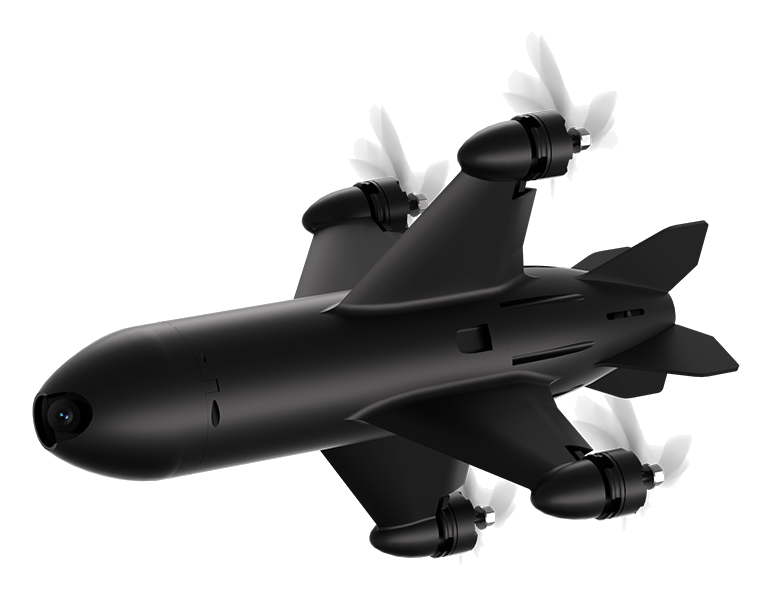
Interceptor Airframe
The common interceptor body every configuration is built around: ducted-fan propulsion, control surfaces, and a nose-mounted electro-optical sensor.
Intercept Control System
Operator, optics, and interceptor: one loop.
Video streaming to the operator's headset, an AI track-lock reticle, man-portable launch support, and a manual-control fallback: the complete operator-in-the-loop intercept system.
Products · Interceptor · New model
INT-5: High-Speed FPV Interceptor
A different model in the interceptor family, built for the fastest closing profiles. The INT-5 is a high-speed FPV interceptor on a streamlined airframe of carbon, composite, and other materials, reaching 100–110 m/s to run down and stop fast-moving aerial threats. A 6S high-speed power system, a dual-antenna control link out to 15 km, and real-time FPV make it a purpose-built platform for high-speed interception, pursuit, and target tracking.
Datasheet
INT-5 full specification
- Streamlined high-speed airframe
- 6S high-speed power system
- Dual-antenna control for signal stability
- Real-time FPV transmission
- 915 MHz / 2.4 GHz control (customizable)
- Built for high-speed interception & pursuit
INT-5 gallery
The high-speed airframe.
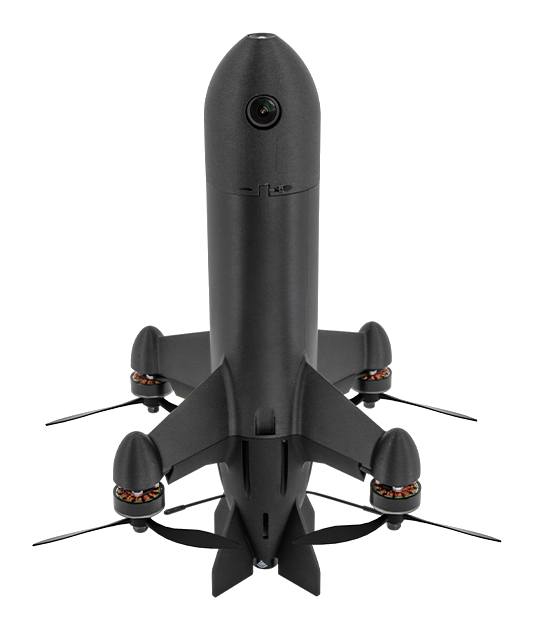
Streamlined body, ducted high-speed motors, and dual electro-optical cameras, the INT-5 from every angle.
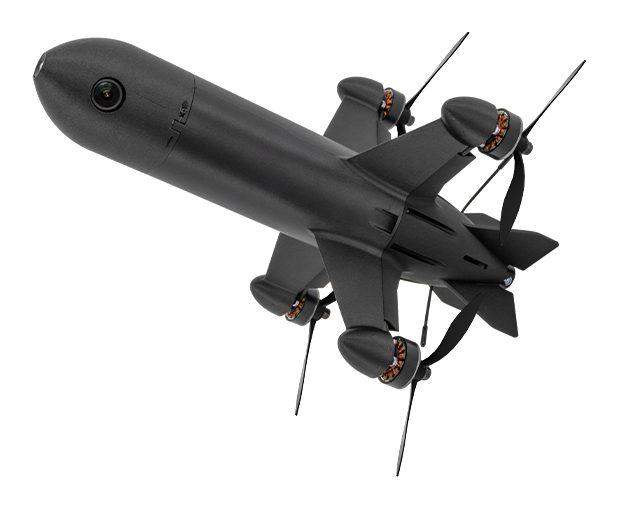
High-speed cruise
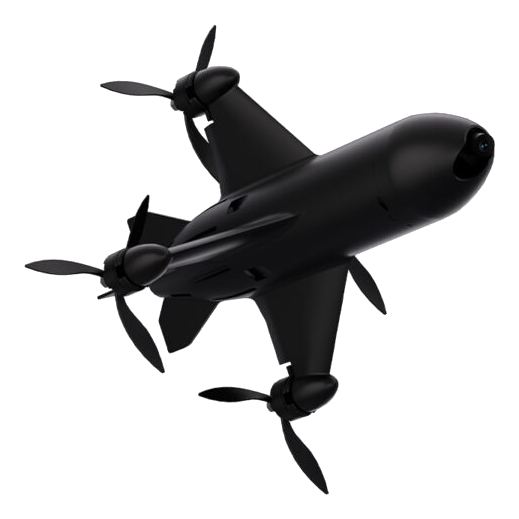
The streamlined interceptor in a fast three-quarter profile.
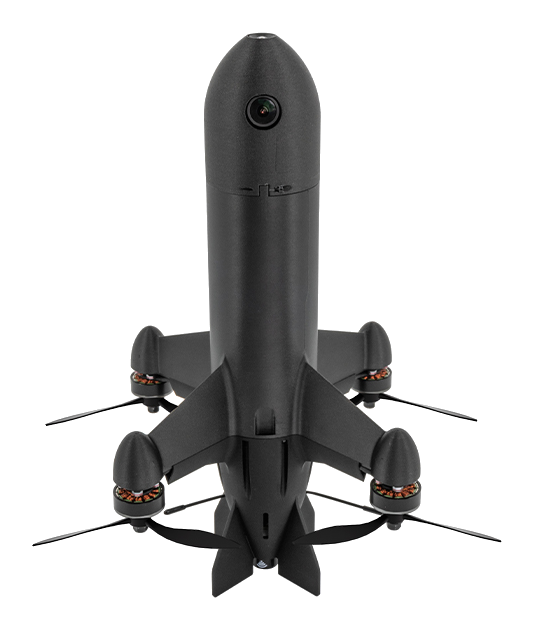
Nose-on
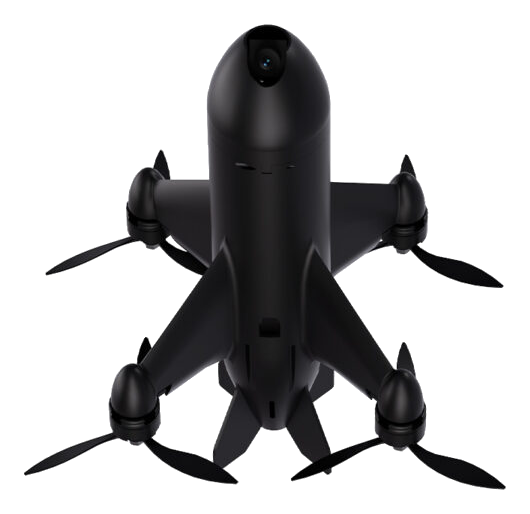
Forward electro-optical camera and streamlined nose.
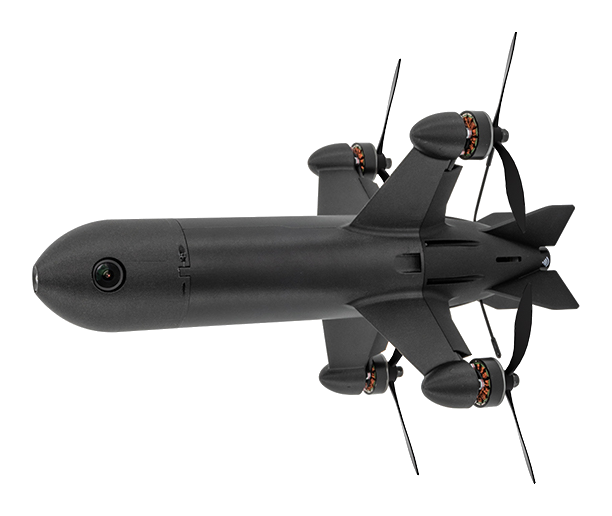
Overhead
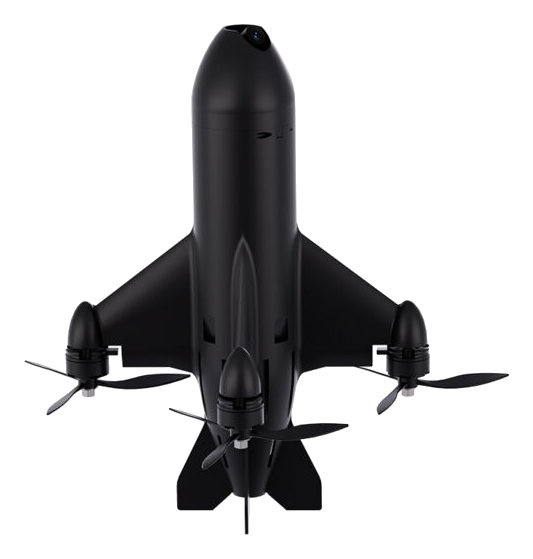
Ducted high-speed motors and control surfaces from above.
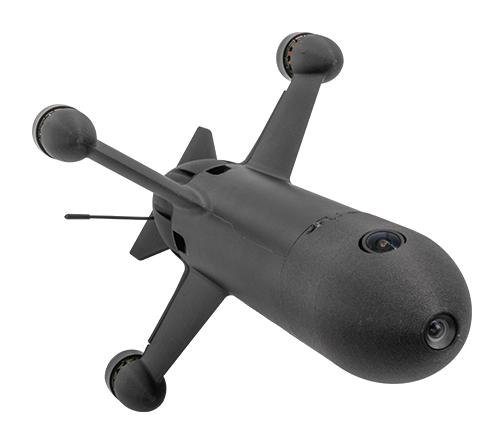
Low angle
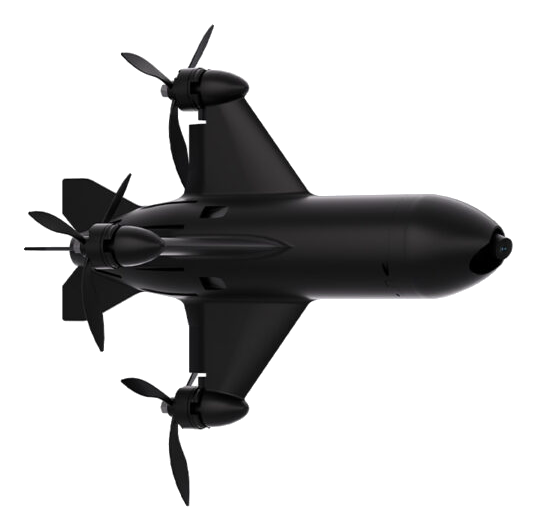
Dual-camera nose and antenna array on the streamlined body.
Development & testing — not offered for delivery
INT-9 is not a shipping product. It is in the development and testing stage, and the swarm formation-flight capability described below is under active development. Performance figures quoted are the specification of selected subsystems, not measured system performance. INT-3 and INT-5 above are the current interceptor family and are what Iron Shield offers today.
Products · Interceptor · In development
INT-9
A Shahed-type attack is not one aircraft. They arrive in stacks — commonly five to seven airframes on the same axis within minutes of each other, flown that way deliberately, to saturate whatever is defending the target. An interceptor that answers one of them has not defended anything. INT-9 is the answer to that arithmetic.
The capability under test
Swarm formation flight
Iron Shield’s focus, and its shipping products, are the INT-3 and INT-5 interceptors. Alongside them the company is in the development and testing stage for swarm formation flight: a group of interceptors launched and flown as one coordinated formation against a multi-track raid, each airframe holding its own track, under one operator and with a qualified human retaining authority over every engagement.
One interceptor against a stack of seven is a queue. A formation against a stack of seven is a defence. That is the whole of the argument, and it is why this is the capability we are putting development effort into rather than more speed on a single airframe.
The same formation answers both jobs the threat presents: the drone heading for a substation, a water plant or an apartment block, and the drone heading for a forward position with a section of soldiers in it. Protection does not change shape depending on who is underneath it.
Coordinated formation
Multiple interceptors flown as one group, with track assignment across the formation rather than one operator per airframe.
Track-per-airframe
Each interceptor holds its own assigned track through the terminal phase, so a seven-airframe raid is answered by seven simultaneous intercepts rather than seven sequential ones.
Human authority retained
Autonomy compresses the timeline; it does not remove the operator. A qualified human commands the engagement, exactly as on INT-3.
GNSS-denied by design
Vision-based navigation, so the formation holds together when satellite navigation is jammed — which, against this threat, it will be.
Why the cold matters
A lock that fails at −40 °C is not a defence.
Canada’s approaches and NATO’s northern flank are not temperate. Most systems in this class are specified for conditions that do not exist there. INT-9 is specified to −40 to +60 °C, and holding target lock at the bottom of that range is the property the whole design is built around. An interceptor that works in Ontario in April and not in Nunavut in January defends the easy half of the country.
What the interceptor does
Certified avionics, not hobby hardware.
INT-9 is designed and built to civil aviation software and hardware assurance standards. That is unusual in this class and it is deliberate: an aircraft that is going to be flown near people, in a formation, under a human operator, should be built to the standard aviation applies to aircraft that carry people.
Flight control & guidance
Fully autonomous flight control with vision-based navigation for GNSS-denied operation. Threat selection and follow, held through the terminal phase. Selectable intercept geometry — the angle at which the interceptor closes on the track. Manual control on operator demand, with fly-by-camera as the fallback.
Sensors & peripherals
Inertial and magnetic sensing fused with external cueing, so an external radar can put the interceptor onto a track before its own optics have it. ADS-B, altimeter and gimballed day/night optics are carried on the airframe, and the fused picture is what holds the lock through the terminal phase.
Design standards
Developed to DO-178C (airborne software) and DO-254 (airborne electronic hardware), under an ISO 9001 quality system, with redundant power and custom failsafe routines defined per flight phase. Acceptance test reports and certificates of conformity available under NDA.
Mission programming
Model-based design with customisation down to PID level. Flight phases — take-off, cruise, terminal, recovery — are programmable, as are failsafe, phase-change and operational automations. Custom protocols and an external mission computer are supported.
Data protection
Encrypted data handling throughout, with onboard erase of mission data before the terminal phase. An interceptor that does not come back should not leave anything recoverable in a field.
NATO-standard integration
Built to integrate with allied command-and-control rather than replace it, with defined interfaces for track handoff and external radar cueing. Interoperability is an engineering objective and is subject to platform-specific validation and approval.
The properties above describe design intent and the assurance standards INT-9 is being developed to. They are not measured performance of a fielded system, because there is not one yet. Nothing on this page constitutes an offer of supply, and every capability remains subject to test, licensing and export approval.