
Products · Ground / UGV
RAVLYK
The RAVLYK family (UMP-2 “RAVLYK”) is a modular 6×6 uncrewed ground robotic complex, engineered by frontline-proven teams to take the most dangerous jobs off soldiers. One electric platform reconfigures in the field for logistics, casualty evacuation, heavy-equipment transport, firefighting, air-defense early warning, and force protection, carrying supplies, radar sets, and the wounded across ground too exposed for a crewed vehicle. Approved by the Armed Forces of Ukraine with military codification completed and a NATO Stock Number assigned, The Ukrainian-origin RAVLYK platform has been codified and approved for use by the Armed Forces of Ukraine and is reported in operational service in Ukraine through Iron Shield’s Ukrainian technology partners. Individual mission modules and Iron Shield-proposed configurations may have separate approval and availability status.
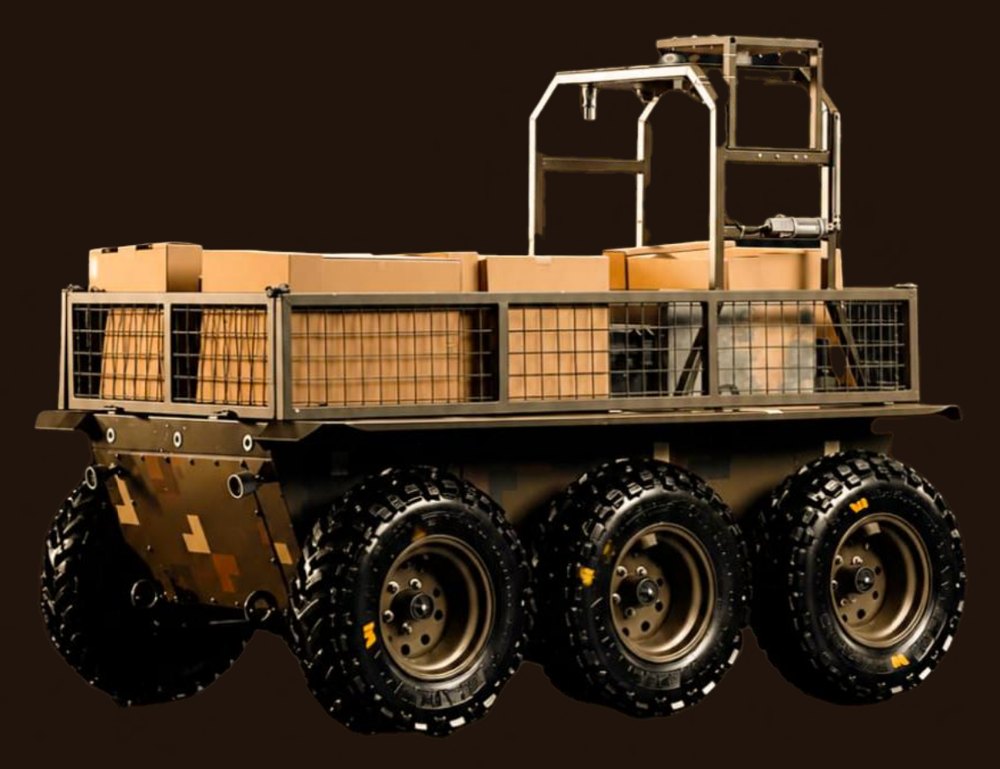
Datasheet
Full specification
- Modular mission architecture
- Autonomous resupply & casevac
- Heavy-equipment & radar transport
- Air-defense early warning
- Low acoustic signature
- Codified & approved for use by the Armed Forces of Ukraine; NATO Stock Number assigned
The platform, turning
One chassis, three configurations.
The same 6×6 electric base with three mission modules fitted. Each one swaps onto the same mechanical and electrical interface in fifteen to thirty minutes. Shown at a common scale, so the differences in height are real.
Flatbed resupply. 350 kg on the deck, a 2,000 kg trailer behind it, 35 km of range.
Stretcher-based casualty evacuation, bringing the wounded out while the recovery crew stays under cover.
Acoustic detection of Shahed-type UAVs from a telescoping mast, feeding early warning to air-defence units.
Capability film
Six configurations in half a minute.
The same chassis doing six different jobs, with the numbers on screen. No sound — nothing is lost with it muted.
By configuration
Specifications by variant
One electric 6×6 base in two payload classes. Figures from the RAVLYK (UMP-2) brochure.
| Configuration | Payload | Towing | Speed | Range |
|---|---|---|---|---|
| RAVLYK 2.0 Cargo | 350 kg | 2000 kg | 12 km/h | 35 km |
| RAVLYK-ARQS, heavy base | 500 kg | 2000 kg | 12 km/h | 50 km |
RAVLYK Family
One platform. Every mission.
The RAVLYK chassis reconfigures in the field across a family of mission modules: logistics, casualty evacuation, air-defense detection, firefighting, and force protection, on a single electric 6×6 drivetrain.
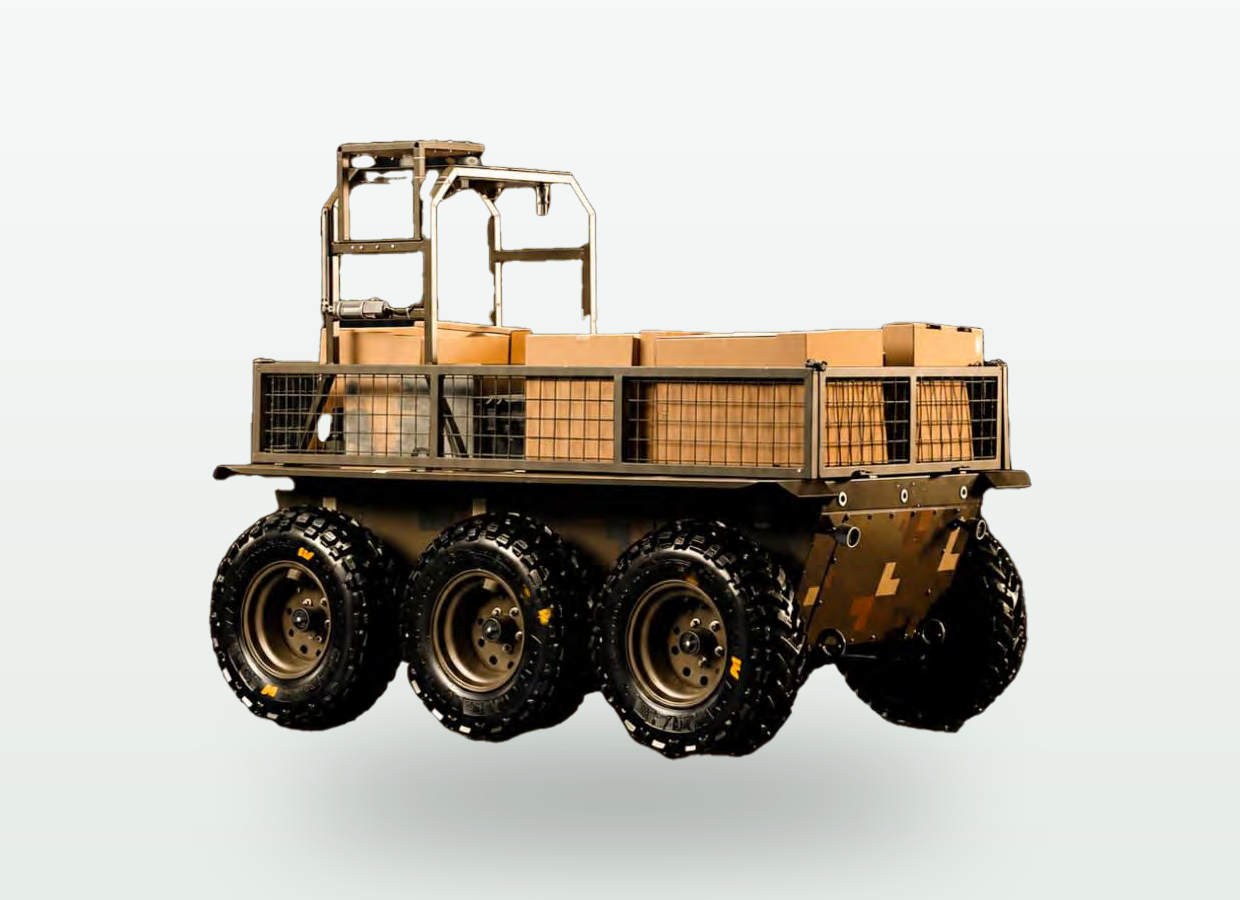
RAVLYK 2.0 Cargo
Flatbed resupply of provisions, water, fuel and heavy equipment into positions too exposed for crewed vehicles. Up to 2.5 tonnes per mission counting the towed trailer.
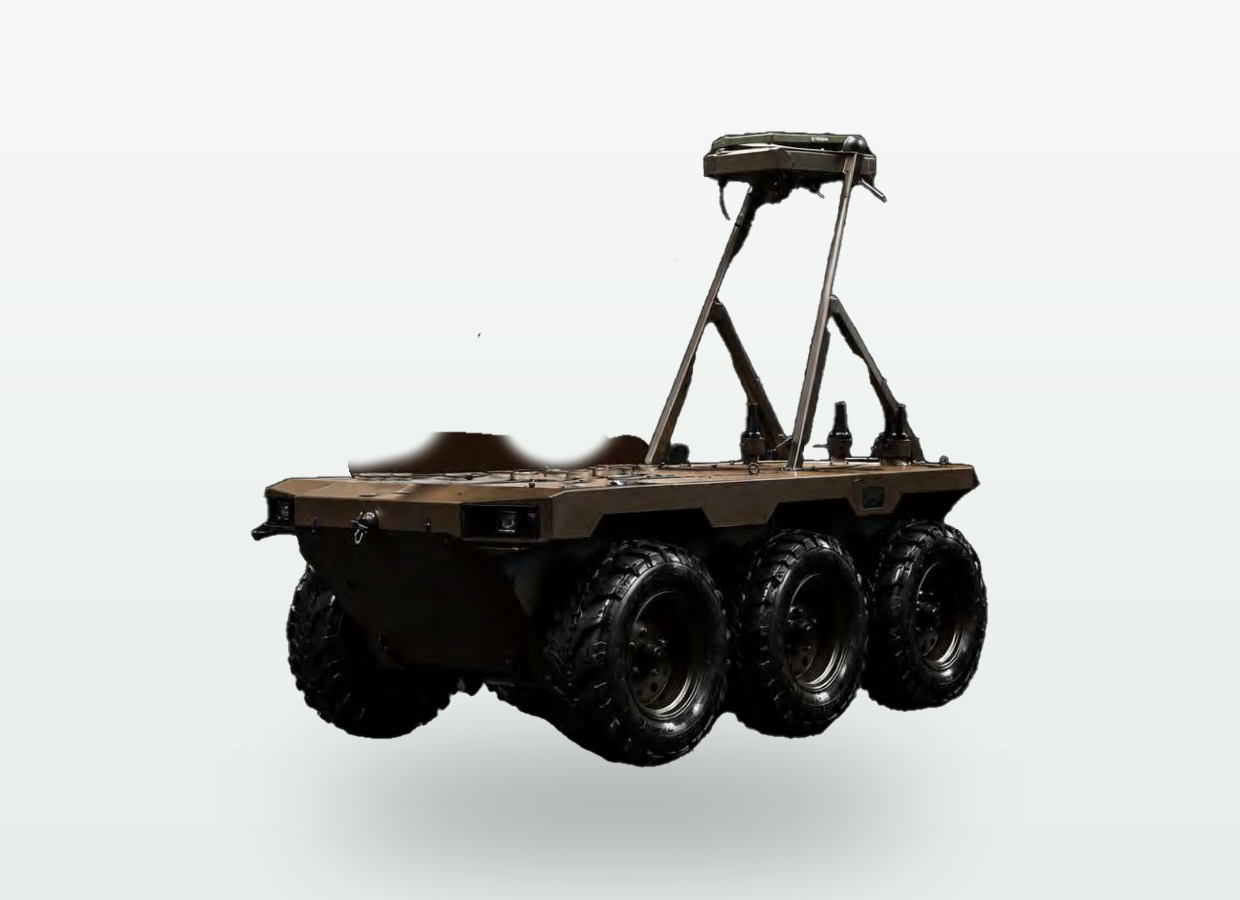
RAVLYK-ARQS
The heavy-payload base platform, the mobility core every configuration is built on: a flat module deck, 500 kg of payload and half again the range.
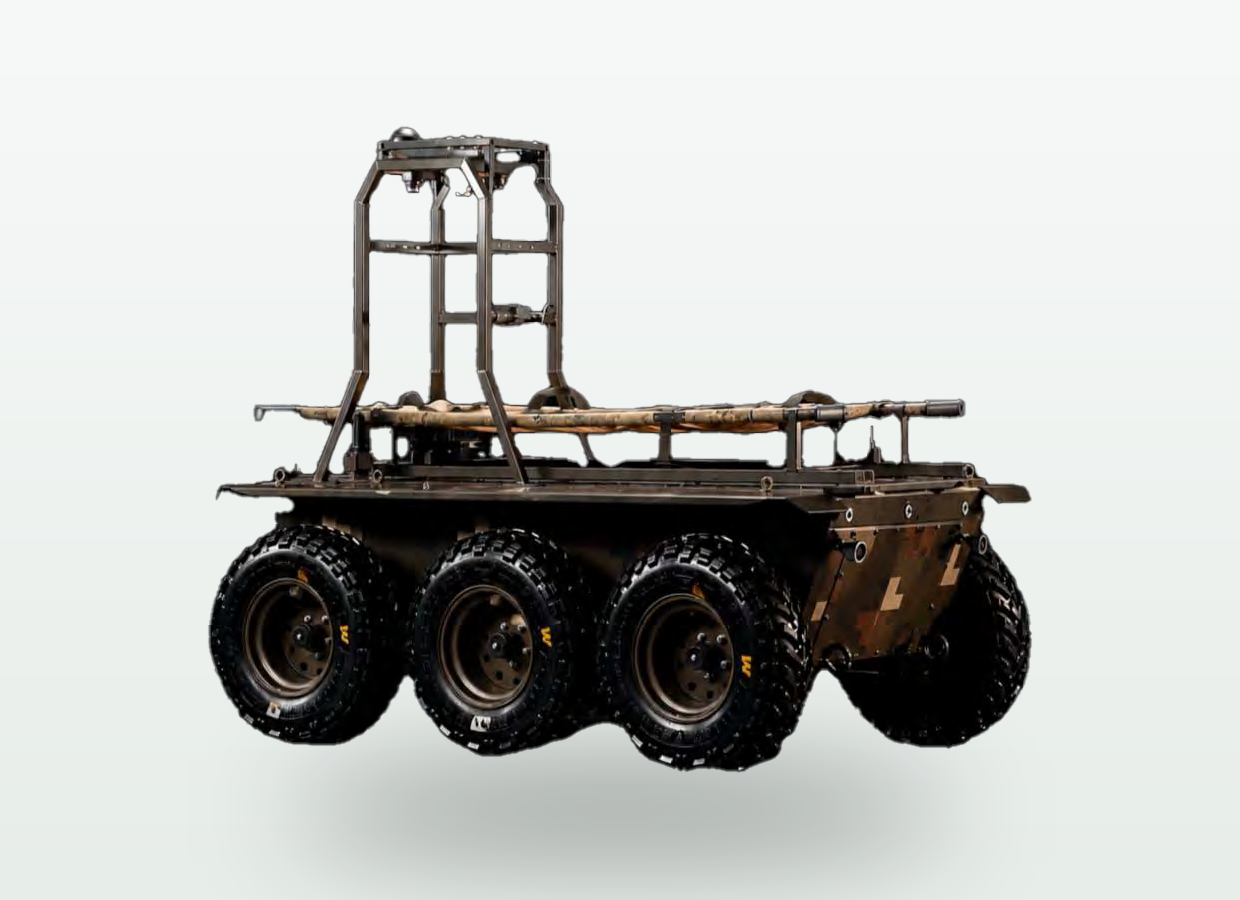
RAVLYK 2.0 Medevac
Stretcher-based casualty evacuation from frontline positions, bringing the wounded out under remote control with their condition monitored on the way, while the recovery crew stays under cover.
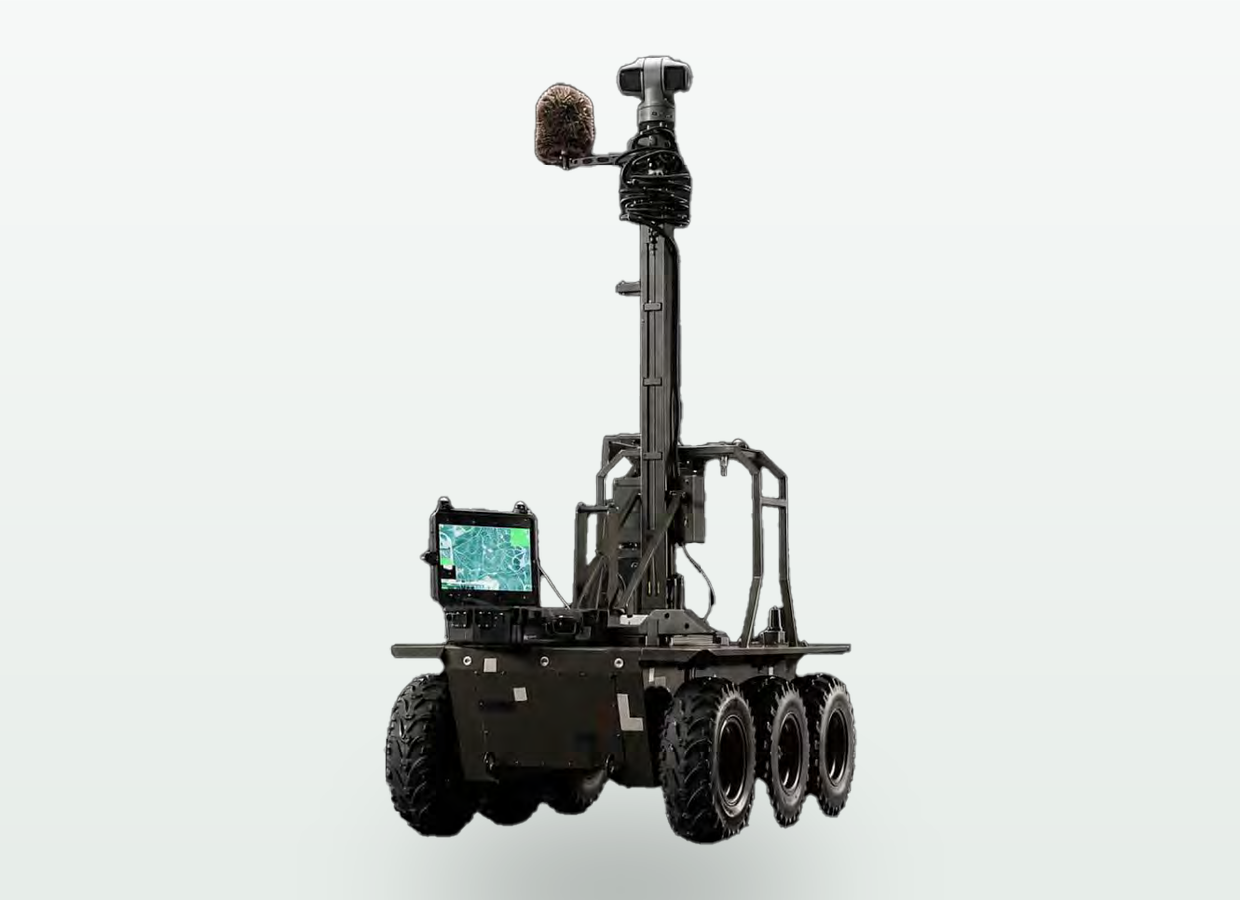
RAVLYK 2.0 Shahed Detector
Mobile unmanned detection platform supporting air-defence units through early warning: acoustic detection of Shahed-type UAVs from a telescoping mast, with visual acquisition and tracking on the same head.
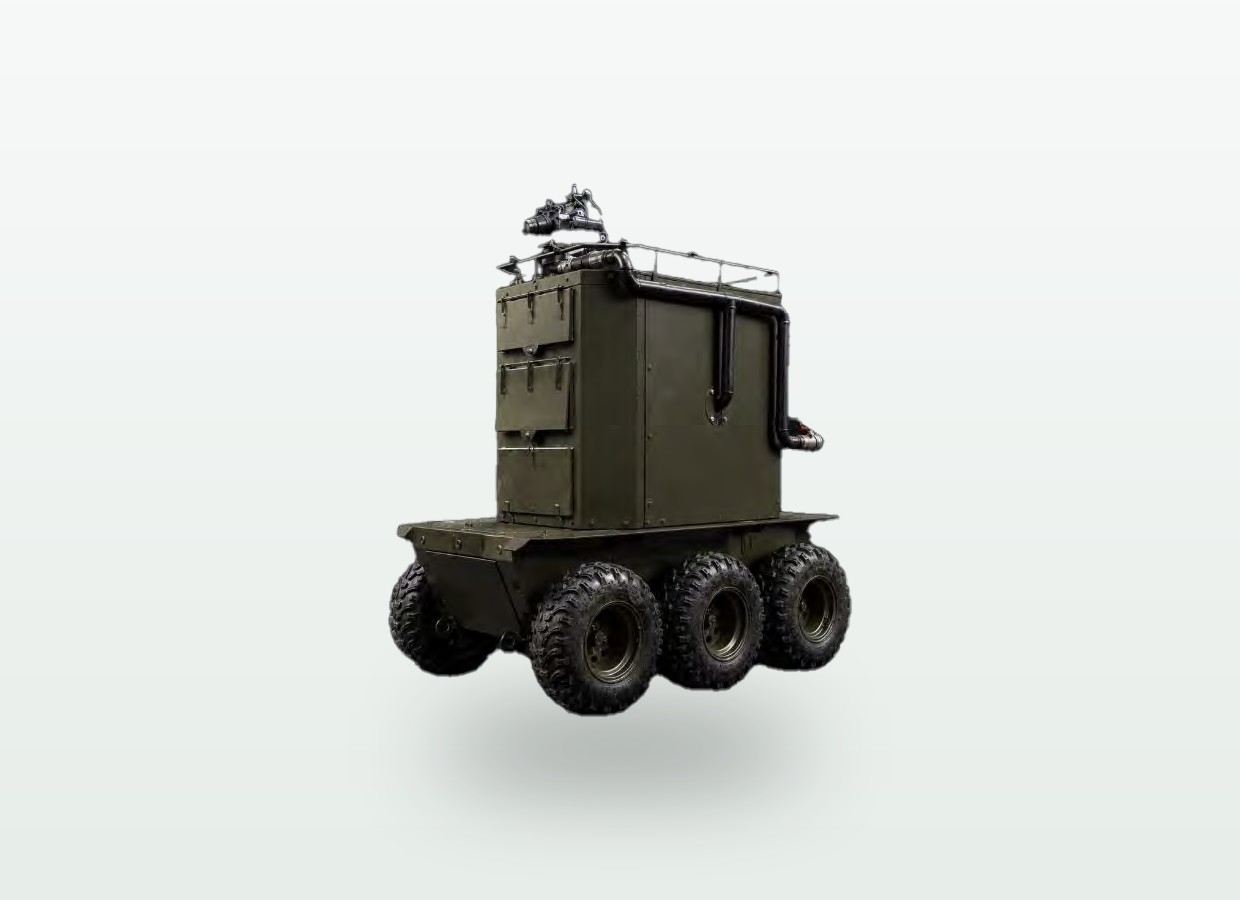
RAVLYK-FireGuard
6×6 robotic firefighting platform for hazardous and inaccessible environments: a water and foam trailer module with pump and filtration, reaching scenes rescuers cannot approach.
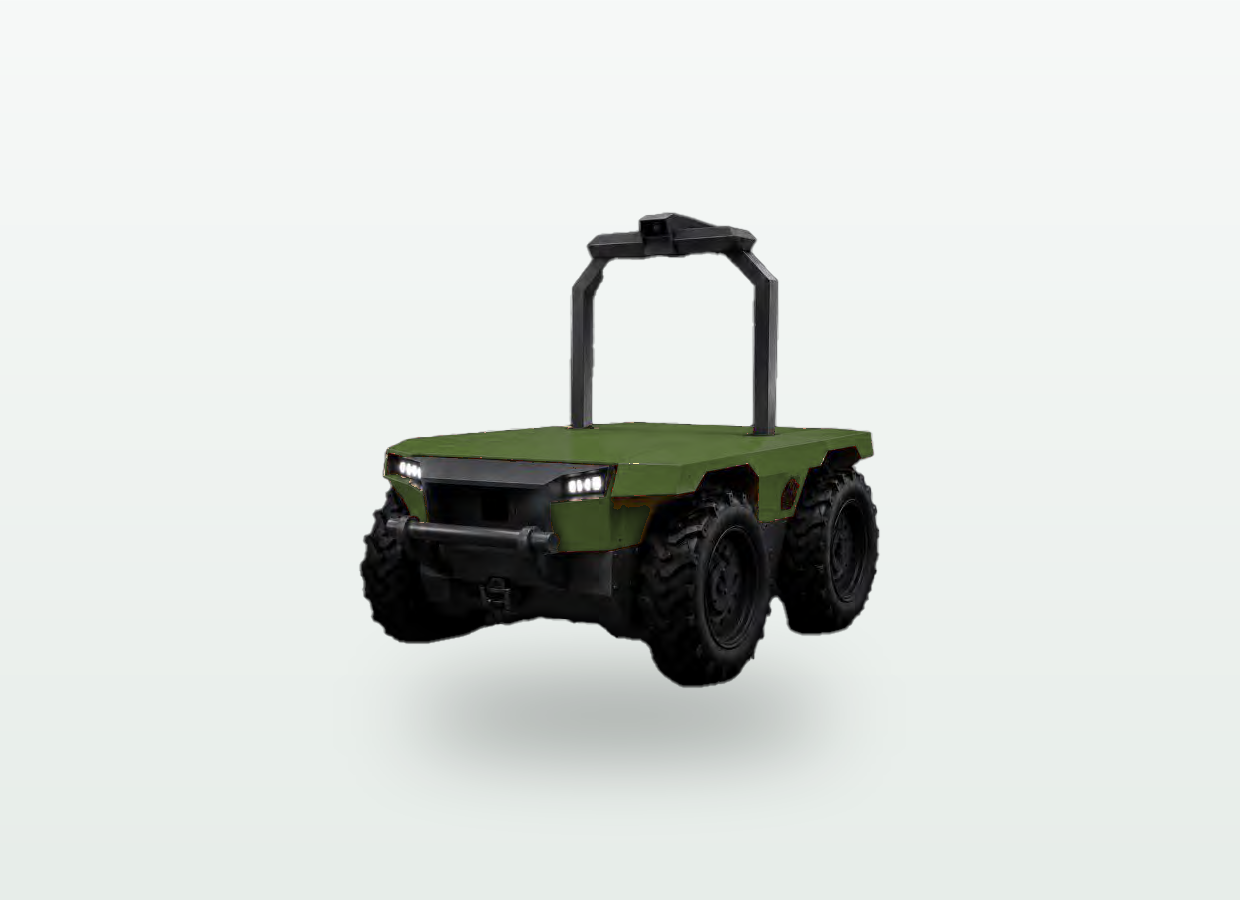
RAVLYK-Industrial
The civil configuration: continuous autonomous patrol of industrial sites and critical infrastructure, with AI-based detection of intrusions and violations.
Also in the RAVLYK line
Additional mission modules
RAVLYK 2.0 Heavy Equipment Mover · RAVLYK Service Trailer · RAVLYK-Industrial · RAVLYK-FireGuard trailer: the same proven mobility base, reconfigured for the task.
In Service With
Codified & approved for AFU use
The RAVLYK platform completed extensive field trials in frontline operational conditions in 2023, confirming its reliability, mobility, and effectiveness. It is approved by the Armed Forces of Ukraine, has completed military codification, and has been assigned a NATO Stock Number (NSN), a formal credential that few uncrewed ground systems hold.
Platform data
The base, in numbers.
Figures for the UMP-2 platform itself, common to every configuration on it.
Range is stated for out-and-back operation. These are the manufacturer’s figures for the UMP-2 platform; per-configuration payload and range are in the table above.
Use cases
Where a robot goes instead of a person.
Every one of these is a job that currently costs an exposed crew. The platform is the same in each; only the module changes.
Firefighting and rescue
A pump-and-hose module reaches fires and hazardous scenes that rescuers cannot approach, with a manipulator for clearing rubble and handling dangerous objects.
Casualty evacuation
Stretcher-based recovery of the wounded from an exposed position, under remote control, with the casualty monitored on the way out.
Logistics and technical support
Delivery of supplies, materials and equipment across difficult terrain, up to 2.5 tonnes per mission counting the towed trailer.
Reconnaissance and surveillance
Cameras, thermal imagers and acoustic sensors building the picture across a sector, extended further when paired with air platforms.
Autonomous perimeter patrol
Continuous patrolling of industrial sites and critical infrastructure, with AI-based detection of intrusions and violations.
Modular architecture
One mobility base. Many jobs.
The UMP-2 was designed from the start as a universal platform that reconfigures, rather than a vehicle that does one thing. A unit trains once, maintains one drivetrain, carries one set of spares, and changes the mission by changing the module — a fifteen to thirty minute job in the field.
That is the whole economic argument for ground robotics at scale. A fleet of single-purpose vehicles is a fleet of separate training pipelines, separate spares chains and separate maintenance burdens. A fleet of one platform is not.
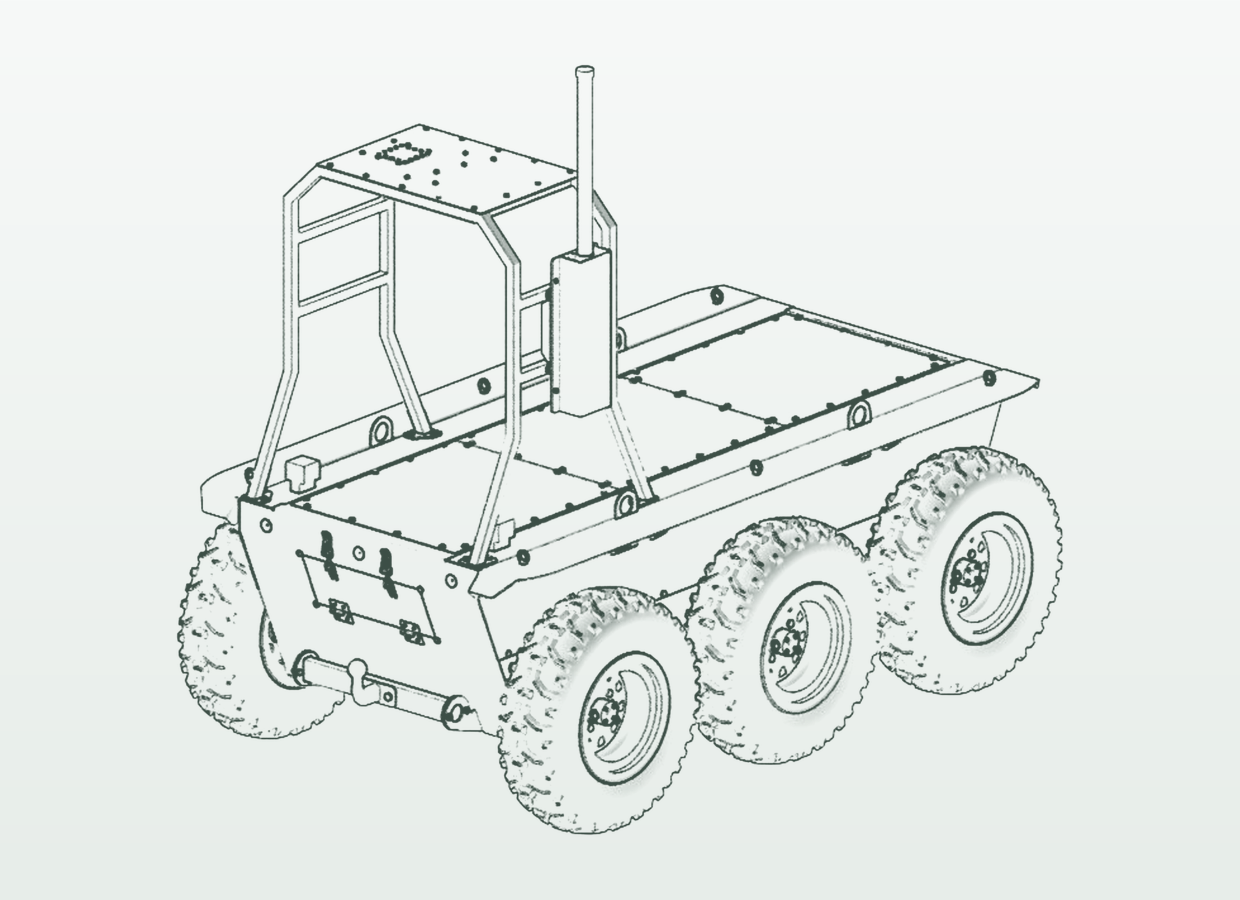
UMP-2 base platform — 6×6 electric drivetrain, flat module deck
As reported
On the record, not on our say-so.
The platform’s service status is a matter of public record. The summaries below are ours; the sources are named so they can be checked.
Codified and approved for the Armed Forces
The Ministry of Defence codified and approved the platform for use in the Armed Forces of Ukraine, describing a fully Ukrainian development that weighs a little over half a tonne, carries several hundred kilograms of cargo or tows a nearly two-tonne trailer, and moves quietly on an electric motor and soft all-terrain tyres. A sealed, dust- and water-resistant hull keeps it working in poor weather, and it transports on an ordinary car trailer.
Reported by the Ministry of Defence of Ukraine.
Listed by the Ukrainian defence industry association
The National Association of Ukrainian Defence Industries lists the UMP-2 “RAVLYK” as a 6×6 wheeled, remotely controlled ground platform with high-performance characteristics, developed by a member company specialising in unmanned robotic platforms, for delivering goods to remote locations, evacuating wounded personnel quickly from combat zones, and carrying additional functional modules including reconnaissance, manipulator and repeater configurations.
Listed by NAUDI, the National Association of Ukrainian Defence Industries.
An open platform others build on
The independent Ukrainian defence outlet Militarnyi has covered the RAVLYK as a logistics platform whose modular deck other Ukrainian developers integrate their own systems onto. That is worth knowing for its own sake: it is evidence the mechanical and electrical interface is genuinely open, and that the platform has an engineering ecosystem around it rather than a single supplier.
Reported by Militarnyi (Taras Safronov), 26 June 2025.
Iron Shield Systems is not the author of any of the above, and none of it is an endorsement of Iron Shield. Each item is summarised here and attributed to its source.
Also in the ground line
The scout that goes first.
RAVLYK carries the load. Something smaller has to prove the road it carries the load down.
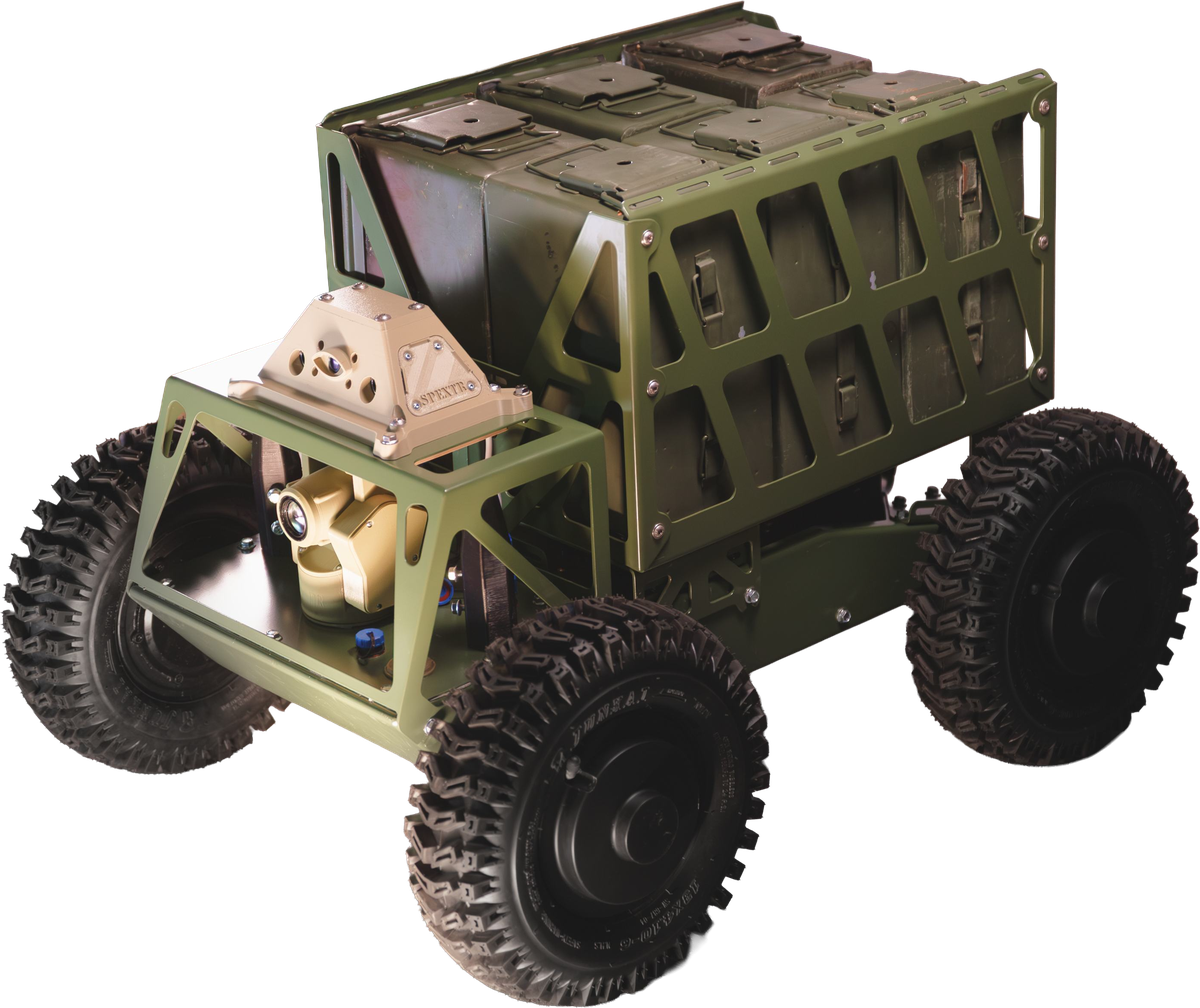
SPEXTR K2
SPEXTR K2 exists so that nobody has to walk the road first. Before a RAVLYK commits to a route carrying several hundred kilograms of supplies, a radar set, or a wounded soldier, the K2 drives it: a compact, rugged 55 kg scout with an 18× surveillance camera and a route-clearance module, proving the ground ahead for mines and obstacles and streaming what it finds back to an operator who never leaves cover. It carries 60 kg of its own, clears 140 mm, and works out to a 7 km control range on a removable battery. Every route it proves is a route no one had to check on foot — and that is the entire point of the pair. The cheapest vehicle in the convoy takes the risk. The people stay behind it.
- Proves the route ahead of the main platform
- Route-clearance module: mines and obstacles
- 18× surveillance camera
- Logistics trunk module
- Removable battery, compact and off-road
- Control range up to 7 km