

Stealth FPV line expands with fiber-optic Fiberon variants
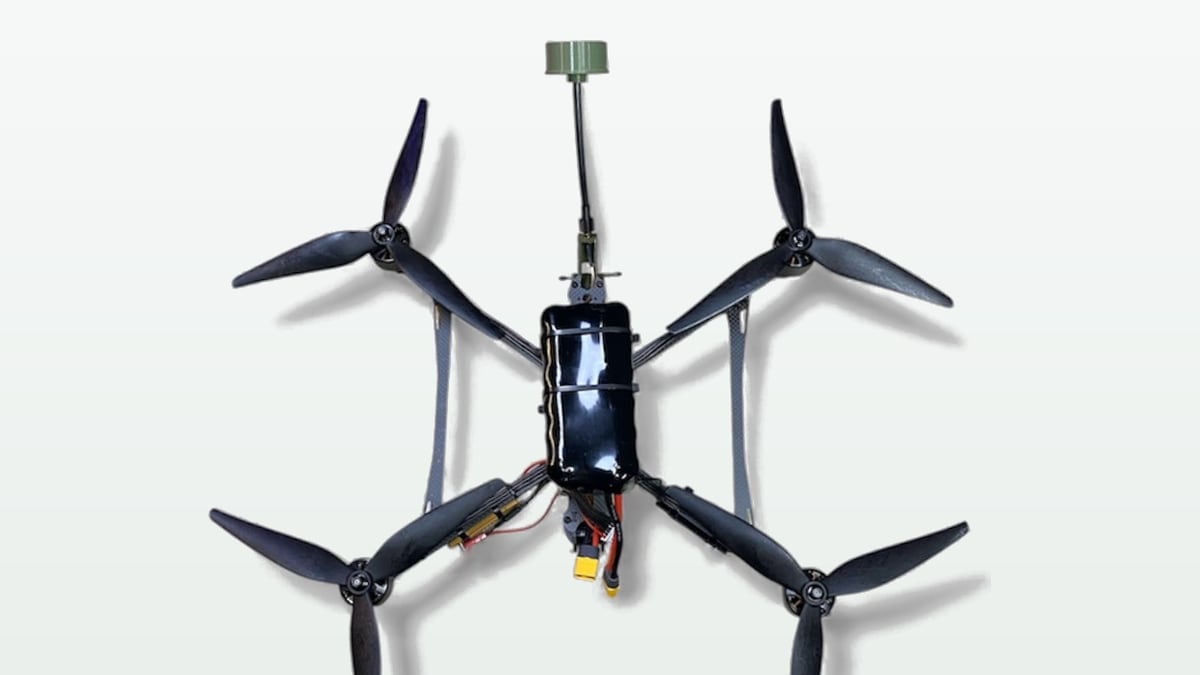
The Stealth product family has expanded to include Fiberon fiber-optic variants designed for operations in environments where conventional radio-frequency control and video links may be disrupted by electronic warfare.
The Stealth product family has expanded to include Fiberon fiber-optic variants designed for missions in environments where conventional radio-frequency control and video links may be disrupted by electronic warfare.
Traditional FPV platforms rely on wireless links to transmit control instructions and live video. In a heavily contested electromagnetic environment, those links may be exposed to jamming, interception, detection or interference. Fiberon platforms address this problem by carrying a physical fiber-optic line between the aircraft and its operator.
Control instructions and full-motion video travel through the fiber rather than through a conventional radio-frequency control link. This architecture is intended to maintain dependable communications in operating areas affected by active jamming or heavy spectrum congestion.
The Stealth family includes several airframe sizes and configurations intended for different endurance, payload and range requirements. Selected Fiberon variants are designed for operating distances extending beyond 20 kilometers, with longer-range configurations reaching up to 30 kilometers under applicable conditions.
The product family can also incorporate daylight, low-light or thermal optics and a modular payload architecture. This allows the basic platform to support different reconnaissance, observation, communications or equipment-delivery requirements without redesigning the complete aircraft.
Fiber-optic systems create their own operational and logistical considerations, including spool management, route planning and the handling of the physical line. They are therefore an additional resilient-control option rather than a universal replacement for conventional radio-frequency platforms.
Final performance depends on airframe size, selected fiber configuration, payload, weather, terrain and mission profile. Detailed configurations and availability are addressed during technical discussions with authorized customers and program partners.