

Iron Shield expands counter-UAS family with INT-5 high-speed interceptor
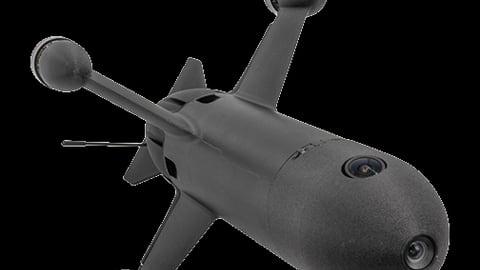
Iron Shield Systems has expanded its INT-series counter-UAS program with the INT-5, a development-stage high-speed FPV interceptor designed for rapid pursuit, target tracking and interception of fast-moving aerial threats.
Iron Shield Systems has expanded its INT-series counter-UAS program with the INT-5, a development-stage high-speed FPV interceptor designed for rapid pursuit, target tracking and interception of fast-moving aerial threats.
The INT-5 complements the INT-3 AI Pixel-Lock interceptor while addressing a different flight profile. The INT-3 is being developed around external sensor cueing, autonomous computer-vision target lock and a high-speed terminal intercept. The INT-5 uses a streamlined FPV configuration intended to give an operator real-time visual control during high-speed pursuit.
The current INT-5 engineering specification includes a maximum flight speed of approximately 100–110 meters per second, equivalent to approximately 360–396 kilometers per hour. The proposed configuration uses a 6S high-speed power system, dual-antenna communications and a streamlined carbon-and-composite airframe.
A real-time FPV video link provides the operator with the visual information required for target pursuit and tracking. Dual control frequencies and configurable communications are intended to improve link stability in demanding operating environments.
The aircraft is being designed for approximately 10 minutes of maximum flight time, a service ceiling of up to 5,000 meters and a control range of up to 15 kilometers under applicable conditions. Actual performance will depend on the final production configuration, communications environment, payload, weather and flight profile.
INT-5 is not yet a fielded or fully validated system. It remains in development, and published figures represent current engineering specifications rather than independently verified operational performance.
The INT-series program is intended to provide a layered family rather than a single one-size-fits-all aircraft. INT-3 focuses on radar-cued, computer-vision-supported interception. INT-5 focuses on high-speed FPV pursuit. INT-9 is being developed separately as a future multi-aircraft formation capability for responding to larger coordinated drone raids.
Qualified human authority remains a central requirement across the INT-series. Automation may reduce the time required to detect, track and pursue a threat, but it does not remove human responsibility for consequential decisions.
Keep reading